
THE FOUNDER’S STORY
How Website Guy Happened
I’ve been messing around with computers for about as long as I can remember.

IN THIS STORY
01
Early days
One of my earliest memories of using one is from when I was four or five years old, sometime in the mid-90s. Most households I knew in Ireland didn’t have a computer yet, but a friend of mine did. His dad had a program on it called PC Genius, a kind of children’s educational game.
I’d never used it before, but apparently I took to it immediately. I was better at it than my friend, despite it being his computer and his game. His dad noticed and started giving me little challenges. At one point he even challenged me to work out his login password.
I did.
That probably should have been a warning sign.
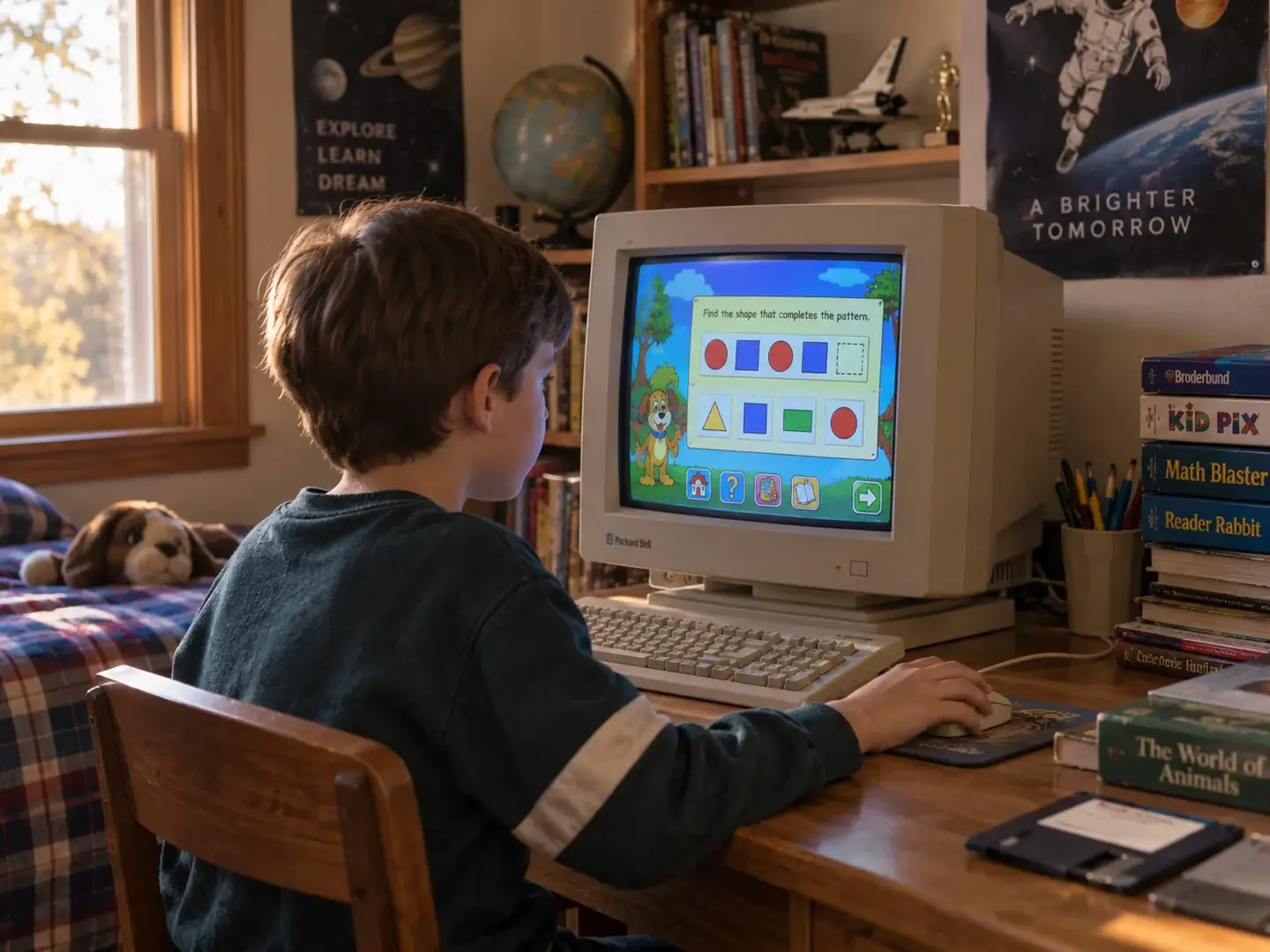
Apparently his dad was impressed enough that he later told my dad he had to get me a computer. I’d picked up how to use his so quickly that, in his view, not having one at home was almost a waste.
So my dad got one.
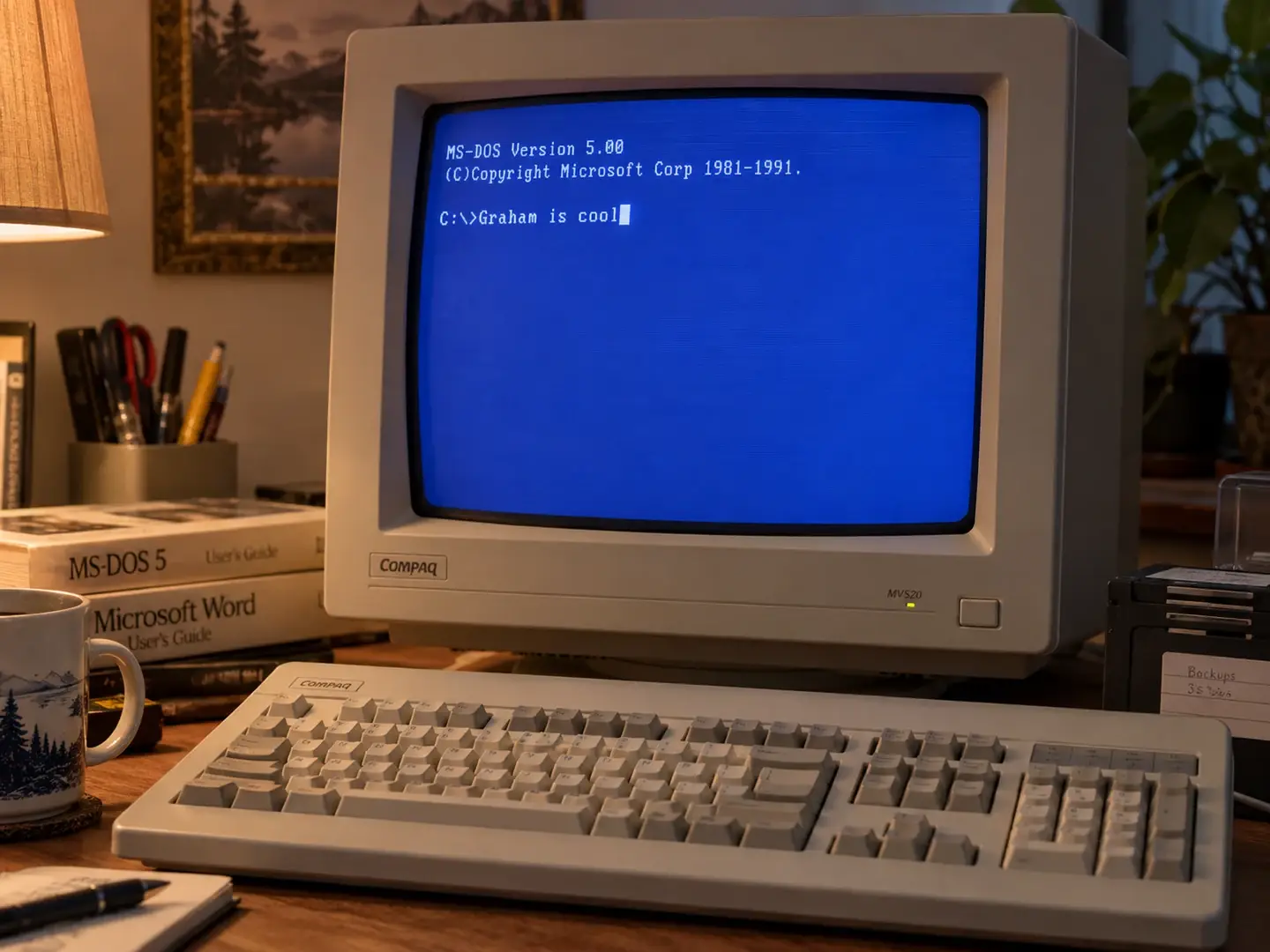
I remember it having 2MB of RAM (yes, you read that right) and being able to load very little beyond a blue screen. But that blue screen had a blinking cursor, and you could type into it. The typing didn’t actually seem to do anything, which somehow didn’t matter.
My dad typed:
Graham is cool
I thought this was brilliant.
I have no idea how much entertainment I got out of simply typing words and watching them appear on a screen.
A few years later, computers had become a much bigger part of my life. In primary school we used Logo, the programming language where you control a little triangle, or “turtle”, by giving it instructions about distances, angles and direction. I liked it enough that I asked my teacher if I could have a copy to use at home.
She copied it onto a floppy disk for me.
That sentence probably dates me more effectively than anything else on this page.
But the thing that really set the pattern for what came later was gaming.
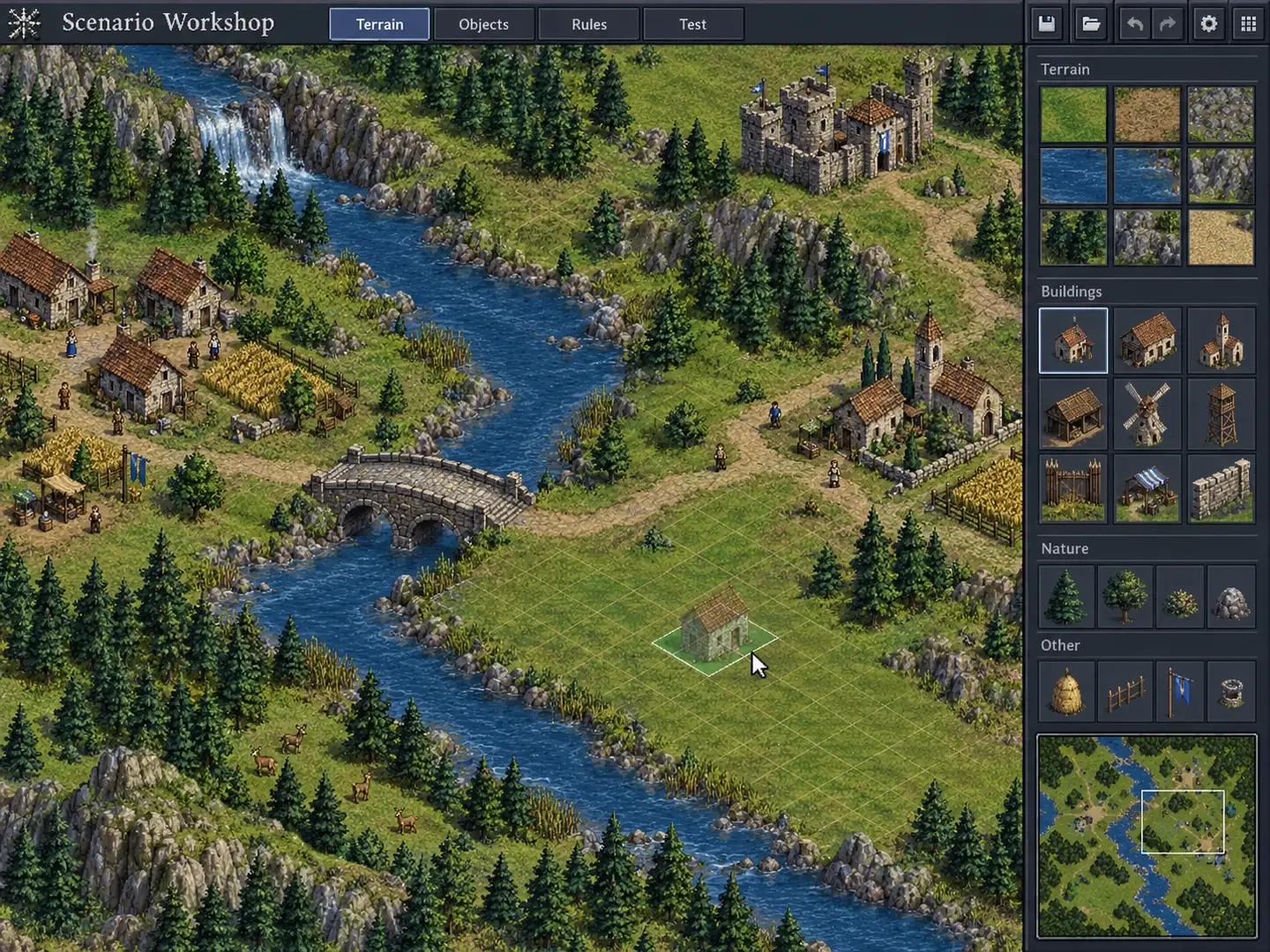
When I was around 12 or 13, I was heavily into Age of Empires. I enjoyed playing it, but fairly quickly I became more interested in what I could make with it. I started designing my own maps and scenarios, then put together a team of people who made them together.
Naturally, all the other design teams had websites.
So we needed one too.
02
From playing with websites to changing how they worked
My first attempts were exactly what you’d expect from a teenager in that era: GeoCities, Freewebs and various other questionable-looking creations.
But over time I started learning what made one site feel better than another. I discovered content management systems, portals and forum software. One that I particularly liked was an Italian CMS called MKPortal.
It was great, except it didn’t quite do what I needed.
For our design team, I wanted an articles section. MKPortal didn’t have one. What it did have was a reviews system, and when I looked at it properly, I realised the underlying functionality was almost exactly what I wanted: formatted text, images, comments and individual pages.
The only problem was that everything called itself a review.
So I started digging through the code.
I changed the language files. I changed the templates. I changed the way it presented itself until, eventually, the reviews system had become our articles system.
It wasn’t elegant. I had essentially bastardised somebody else’s software until it did the job I wanted.
But it worked.
And that basic instinct, if the tool nearly solves the problem, work out how to bridge the gap, has followed me ever since.
Before long I wasn’t just maintaining our own site. I was helping other teams with theirs too.
03
Being the “computer person”
School was much the same.
I was always the person who finished the computer work early. When we did the ECDL, now called ICDL, I scored over 90% across every module.
Unfortunately for everyone else in the computer room, finishing early also gave me time to discover other things.
I worked out how to send messages to computers on the school network and remotely trigger shutdowns. One day another student finished his work and opened the Windows pinball game. A message suddenly appeared on his screen informing him that gaming wasn’t allowed and that his computer was about to shut down.
He called the teacher over.
Rather than admit she had no idea why the computer was doing this, she confidently told him that yes, this was a built-in school security feature and he shouldn’t have been playing games.
It wasn’t.
It was me sitting a few computers away trying very hard not to laugh.
Eventually I was experimenting with remote access and generally seeing what I could make the school network do. Thankfully I managed to get through that phase without getting myself expelled.
It was mostly curiosity. I liked figuring out how systems worked, and then figuring out what else they could do.
04
When it stopped being a hobby
That carried directly into my working life.
I went into retail management in my late teens. Even though I wasn’t employed as an IT person, technology quickly became one of the ways I made myself useful.
At one retailer, our ordering system needed files in a particular format. The handheld scanner we used produced something different, which meant uploading orders was awkward and unreliable.
I worked out a process for converting one into the other.
Before long, colleagues responsible for other departments were coming to me with their orders too.
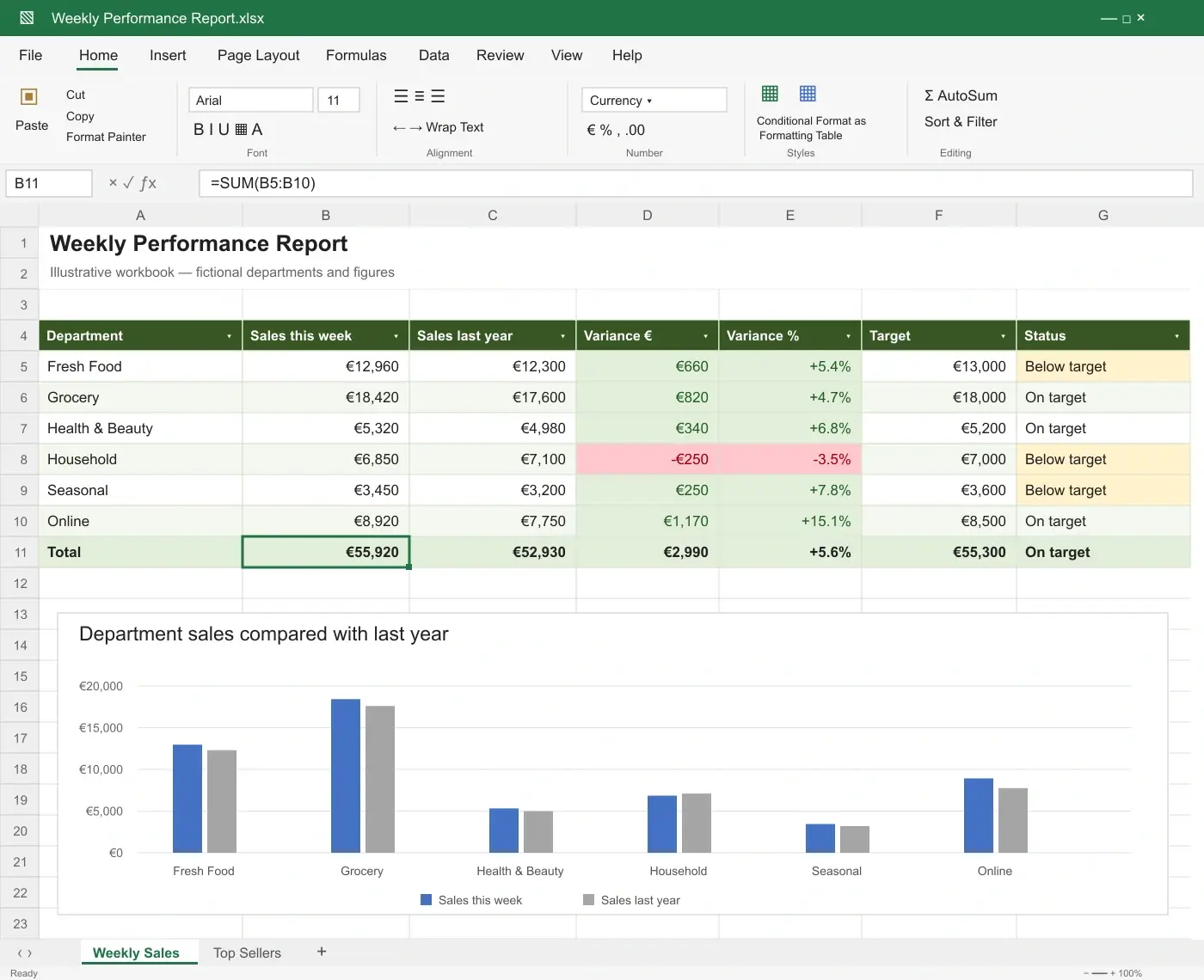
In another retail management role, we had weekly performance reports that had to be sent to our area manager. They weren’t originally my responsibility, but I took them over and started improving them.
What began as an Excel report gradually turned into something closer to a basic business-intelligence tool. Sales versus last year were calculated automatically. Performance was colour-coded. Departments could be broken out and compared.
I also developed top-seller reporting for our store.
That worked well enough that I was eventually asked to produce and distribute the report for stores across the country.
Again, none of this was technically my job.
I just kept finding processes where the computer could do more of the work.
05
Learning what useful software actually looks like
That became much more important when I later joined a small independent business spanning retail, e-commerce and hospitality.
Small independent businesses do not have infinite resources.
You cannot solve every problem by hiring another person. You cannot spend all day repeating a process because “that’s how it has always been done”. When too much lands on one person’s desk, you either find a smarter way to do it or things simply don’t get done.
My role became extremely broad.
I took responsibility for much of the e-commerce operation despite never previously having managed an online store. I rebuilt and expanded large parts of the website, introduced Click & Collect, connected systems with couriers, improved operational processes and built tools to solve problems that kept appearing.
Some were relatively small.
Others saved hours.
One particularly painful process involved supplier invoices. Documents would arrive as flattened PDFs which couldn’t simply be copied into the systems we used. Someone could end up manually typing line after line of information.
So I gradually reduced the human work involved, first with OCR, spreadsheets and macros, and later with increasingly sophisticated tools, until a long manual process became something much closer to uploading files and clicking buttons.
That mattered because efficiency wasn’t an abstract technical exercise.
It was survival.
My workload often felt like more than one person should reasonably have been responsible for. Streamlining meant I could either keep something on my own plate without it consuming my day, or simplify it enough that somebody else could comfortably take it over.
That experience fundamentally shaped how I think about technology.
A good system shouldn’t make somebody feel clever for being able to use it.
It should make the difficult thing easier.
During my time there, I helped the business through four consecutive years of double-digit growth, while its e-commerce operation grew roughly tenfold.
Technology wasn’t the only reason for that, of course. But learning how to remove friction, automate repetitive work and give people better tools was a major part of how I learned to operate.
Many of the things I build today come directly from problems like those.
A small internal tool might begin as a few lines of code because I’m tired of doing something manually. Then it gets improved. Then somebody else needs it. Eventually I realise there are probably businesses all over the place dealing with exactly the same problem.
Some of those internal ideas later evolved into Website Guy products and WordPress plugins.
06
The side project that became Website Guy
Alongside all of that, I had never really stopped building websites.
Friends would ask for help. Family members needed sites. Someone had a WordPress website that looked fine but was painfully slow. Someone else needed content updated or prices changed. Then friends of friends started appearing, followed by referrals from people I worked with.
One example was a website that looked perfectly good but was taking around 20 seconds to load.
The problem wasn’t the design. It was what was happening underneath it.
Within about 15 or 20 minutes, I had it loading in under a second.
Those jobs were satisfying because the improvement was so tangible.
HOW IT CAME TOGETHER
Along the way
Websites for friends and family
Word of mouth
Friends of friends and referrals
Early 2025
Website Guy officially becomes a business
Today
Websites, WordPress plugins and new ideas
Sometimes somebody needed a complete website.
Sometimes they already had one and simply needed somebody who could look at it and say, “Right, here’s what’s actually wrong.”
And at a certain point, I was doing enough of this that pretending it wasn’t a business became a bit silly.
The name Website Guy actually came from somebody whose website I was helping with at the time. She was encouraging me to make something more formal out of what I was already doing and suggested the name.
It stuck.
So in early 2025, Website Guy officially became a thing.
The business was new.
The work behind it wasn’t.
07
What Website Guy is really about
I still enjoy the moment when something goes from an idea in somebody’s head to an actual thing they can see and use.
A new business owner might be excellent at what they do. They might be a brilliant mechanic, barber, teacher, craftsperson, retailer or consultant.
There is absolutely no reason they should also know how to build and maintain a website.
I wouldn’t try to fix my own plumbing just because I technically have access to pipes and tools. I’d probably make an awful job of it and spend far longer doing it than somebody who actually knows what they’re doing.
Websites and software aren’t particularly different.
My job is to take the technical part off somebody else’s plate.
Sometimes that means building a straightforward website without turning it into a six-month agency project.
Sometimes it means fixing the site they already have.
Sometimes it means creating a custom WordPress feature because an off-the-shelf plugin gets 80% of the way there but the missing 20% is the part they actually need.
And sometimes it means building an entirely new tool.
Today, Website Guy has produced websites for businesses across different industries, released plugins through WordPress.org, and has a growing collection of products and ideas in development.
The technology has changed enormously since I was sitting in front of Logo with a floppy disk, or pulling apart an MKPortal module because it didn’t have an Articles button.
The instinct really hasn’t.
I still like understanding how something works.
I still notice when a process is more difficult than it needs to be.
And I still find myself thinking:
Surely there’s a better way to do this.